
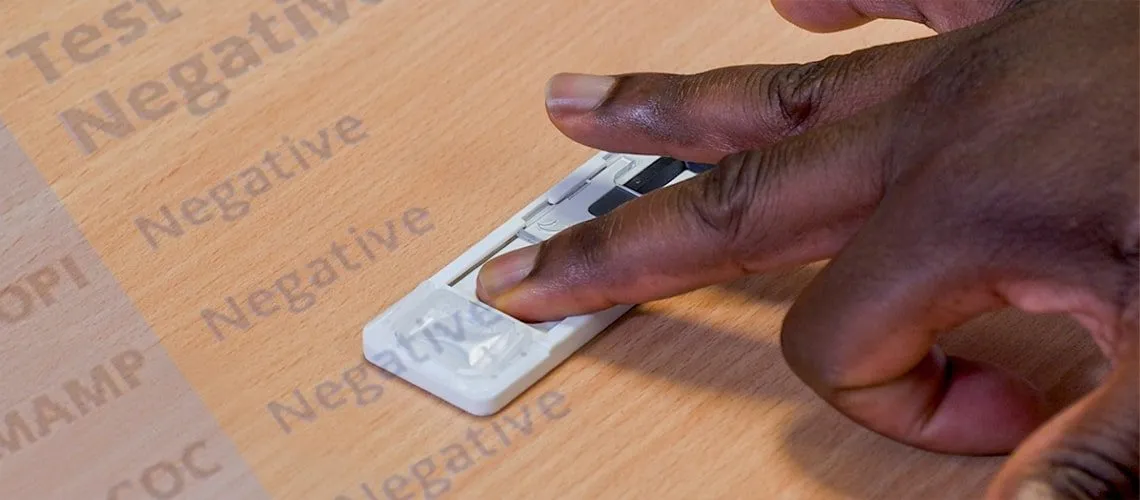
A sweat-based drug test collects sweat residue from the fingertips on a disposable cartridge. The cartridge is placed in a portable reader, which shows the result on screen in about 10 minutes. This guide walks through each step, explains the science behind it, and shows where the test is used.
In Short
- Collection: the person presses all ten fingertips onto a cartridge. It takes less than a minute.
- Analysis: the reader analyses the sample for cocaine, opiates, methamphetamine and cannabis.
- Result: the result appears on screen in about 10 minutes.
How a Sweat-Based Drug Test Works, Step by Step
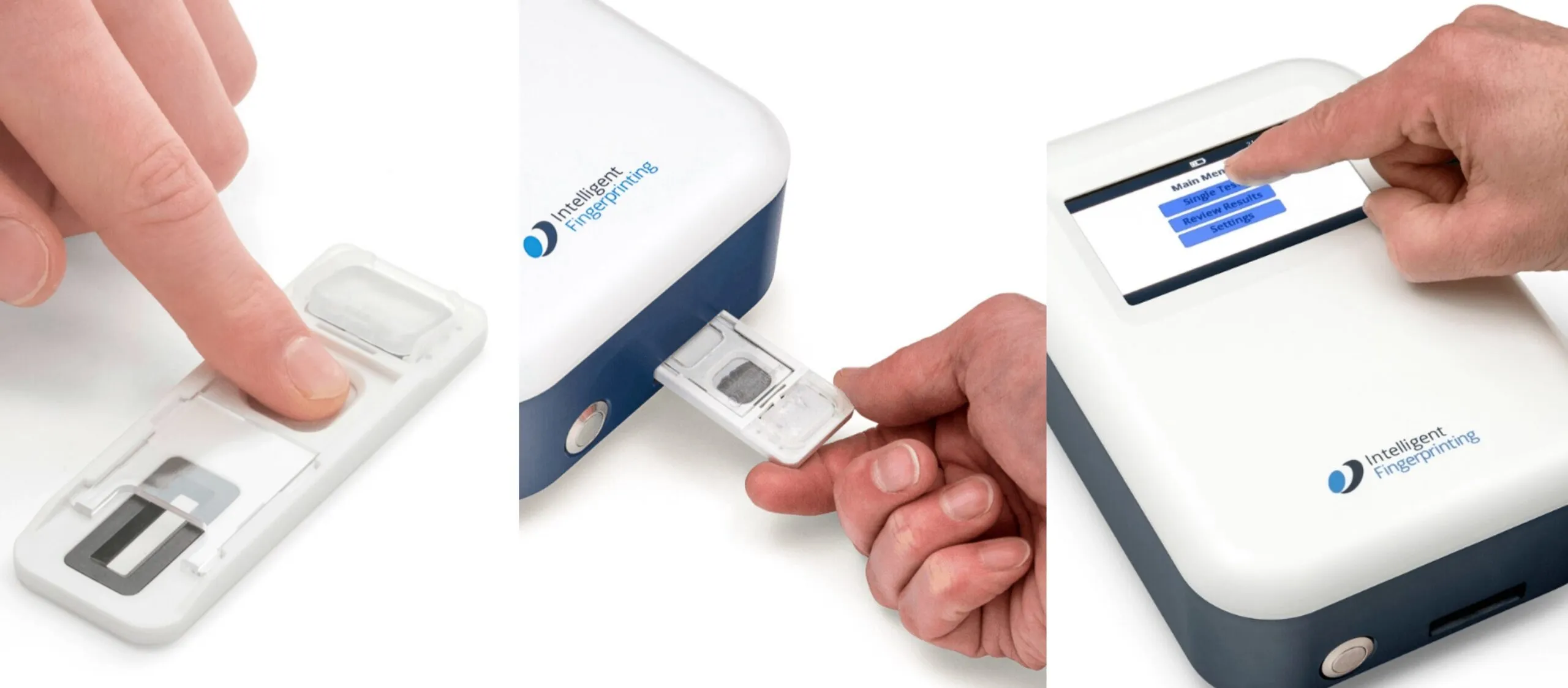
- Sample Collection: The person presses all ten fingertips onto a drug screening cartridge, which collects sweat residue. It is simple, non-invasive and takes less than one minute. The cartridge protects the sample with built-in tamper-evident features, including a self-locking seal.
- Sample Analysis: The cartridge is inserted into a portable reader. The reader analyses the sample for several drug groups at once: cocaine, opiates, methamphetamine and cannabis.
- Result: Within 10 minutes, the reader shows the result on screen. That speed is valuable in workplaces where decisions need to be made quickly.
- Confirmation of Non-Negative Results: If a result is non-negative, a further sample can be collected and sent to a laboratory for confirmation. Only non-negative results need this step.
The Science Behind Sweat-Based Drug Testing
When a person takes a drug, the body breaks it down into metabolites, and these are excreted in body fluids including sweat. The eccrine sweat glands in the fingertips release these metabolites in amounts that can be detected.
The reader uses fluorescence-labelled antibodies to identify the metabolites. A peer-reviewed study of this approach, drug screening using the sweat of a fingerprint, describes the method in detail. Because the sample is collected from the surface of the skin, there are no biohazardous samples to handle, which keeps the process hygienic and straightforward.
What the Test Detects
The screening test covers four main drug groups: cocaine, opiates, methamphetamine and cannabis. Laboratory confirmation can identify a wider range of substances in the sweat sample.
The test is designed to detect recent drug use, typically within the last 16 to 24 hours, so it shows whether someone may be impaired now rather than in the past. The time can vary by substance and by person. See our guide to fingerprint drug test detection times for details.
Keeping the Test Secure
The cartridges are tamper-evident, and the test is carried out under supervision to prevent anyone interfering with the sample. This helps keep results reliable.
Where Sweat-Based Drug Testing Is Used
It is used in safety-critical industries such as transportation, manufacturing and construction, to help keep workplaces drug-free.
- Pre-Employment Screening: helps employers check that candidates meet safety standards before they start.
- Random Testing: deters drug use through unannounced checks.
- Post-Accident Investigations: shows quickly whether impairment may have played a role in an incident.
Our guide to workplace drug testing explains how these testing situations fit into a drug and alcohol policy.
Benefits at a Glance
- Privacy and Dignity: a discreet, non-invasive process that is more comfortable than traditional methods.
- Portable: testing can take place at any time and location, without specialist facilities.
- Quick: results in under 10 minutes, with little disruption to the working day.
- Cost: employers can bring testing in-house and test on site without specialist staff. See what affects the cost of fingerprint drug testing.
The Future of Sweat-Based Drug Screening
The technology continues to develop. Broader validation across different workplaces will help build confidence in more sectors, and advances in areas such as data analysis may improve accuracy and efficiency further. The range of drugs covered by the screening panel could also expand over time.
Conclusion
Sweat-based drug testing is a quick, non-invasive way to screen for recent drug use. It takes less than a minute to collect a sample and about 10 minutes to get a result, and it can be done on site. That makes it a practical option for safety-critical workplaces where timely decisions matter.
Useful References
- University of Surrey: Experimental Fingerprint Test Can Distinguish Between Those Who Have Taken or Handled Cocaine
- Intelligent Fingerprinting: Technology
- Drug Screening Using the Sweat of a Fingerprint (PubMed Central)
- Intelligent Fingerprinting: How Fingerprint Drug Testing Works
- Industrial Compliance: Fingerprint Drug Testing Now a Reality for UK Employers
- Fingerprint Drug Testing: Transportation and Construction Sectors