
Fingerprint drug testing isn’t a single, fixed procedure — how and when it’s used changes depending on the situation. Random testing, post-incident testing, testing upon suspicion, and follow-up testing after a positive result all serve different purposes, and each needs its own approach to stay fair, legal, and effective.
This guide covers all four, and what employers need to get right regardless of which scenario applies.
Random Testing
Random testing selects employees for screening without prior notice. Its value is less about catching anyone in particular and more about deterrence: because any employee could be tested at any time, the constant possibility discourages substance use in the first place.
Fingerprint testing suits random testing well for a few reasons. It requires just a fingerprint, so there’s no need to arrange a private space or handle biohazard samples. Results are available within minutes, meaning a random test doesn’t turn into a lengthy disruption to someone’s shift. And because the sample is taken directly from the employee under supervision, there’s little scope for tampering or substitution — a common weak point in other methods.
Organisations running random testing programmes have reported fewer workplace accidents, lower absenteeism, and better overall morale — largely because a well-run programme is felt as routine and fair rather than as scrutiny of individuals.
Post-Incident Testing
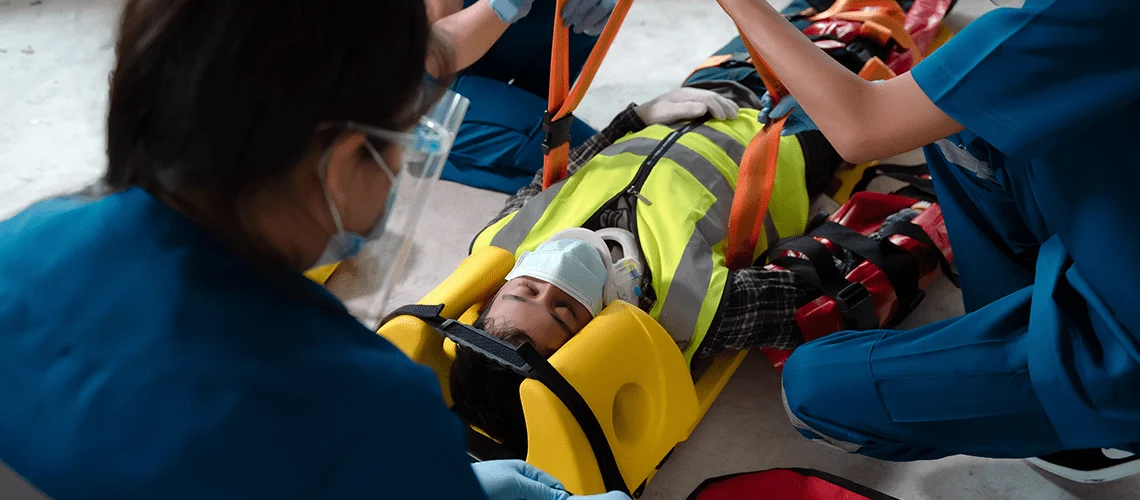
When an accident or incident happens, establishing quickly whether drugs or alcohol were a factor is essential — both for immediate safety decisions and for preventing a repeat. Post-incident testing is one of the clearest, most defensible uses of workplace drug testing, and it plays three roles: identifying root causes, reinforcing existing safety policies, and giving affected employees a route into support if substance use turns out to be a factor.
Speed matters more here than in almost any other scenario. Fingerprint testing gives a result almost immediately, so a company isn’t left waiting hours (or days, with lab-based methods) to understand what happened and what to do next. It’s also non-invasive, which matters in the aftermath of an incident when employees may already be under stress.
Testing Upon Suspicion
Suspicion-based testing is triggered by observable behaviour — a change in productivity, erratic conduct, or physical signs — rather than a schedule or random selection. It’s the most sensitive of the four scenarios, because it singles out an individual, so it needs to be handled with more care than random or scheduled testing.
Fingerprint testing’s main advantage here is dignity: it’s quick, requires no private room or biohazard handling, and doesn’t feel as intrusive as urine or blood collection at a moment that’s often already difficult for the employee involved. That doesn’t remove the need for a clear, written policy defining what counts as reasonable grounds for suspicion, or for managers to be trained on how to raise it appropriately — but it does make the testing step itself less confrontational.
Follow-Up Testing
Follow-up testing supports employees returning to work after a positive result, as part of a structured rehabilitation and support process rather than a one-off check. It’s tailored to the individual — the frequency and duration typically reflect their specific recovery plan rather than a fixed company-wide rule.
Because this testing is meant to support recovery rather than catch people out, the non-invasive, low-stress nature of fingerprint testing fits particularly well: employees undergoing follow-up testing are already navigating a difficult period, and a quick, dignified process reduces the added pressure of the test itself. Quick results also mean progress can be acknowledged and acted on promptly, rather than employees waiting anxiously for lab turnaround.
Getting the Policy Right, Whichever Scenario Applies
Across all four situations, the same fundamentals apply:
Write it down clearly: employees should be able to see, in advance, when and how each type of testing applies, and what happens next depending on the result.
Get consent, and stay compliant: testing must be built into your wider drug and alcohol policy, with employee consent obtained for practical and legal reasons, and procedures kept aligned with current UK employment law.
Communicate with intent: random and post-incident testing rely on employees understanding the process is fair and consistent; suspicion-based and follow-up testing rely on employees understanding the focus is safety and support, not punishment. Getting that framing right in how you communicate matters as much as the testing method itself.
Review regularly: employment law and best practice both shift over time — policies written once and never revisited are the most common source of avoidable disputes.
How Auctus Management Group Can Help
As the UK Distributors for Intelligent Fingerprinting, Auctus Management Group can help a variety of sectors, including transportation and construction, to deliver a non-invasive, hygienic solution for drug screening in the workplace — whatever the scenario.
If you would like to discuss how we can help your company with a fully managed fingerprint drug testing service, please get in touch to chat through your requirements. Contact our Delivery Manager, Leanda Waring, on 0330 113 0004 or email inductions@auctusmg.co.uk